

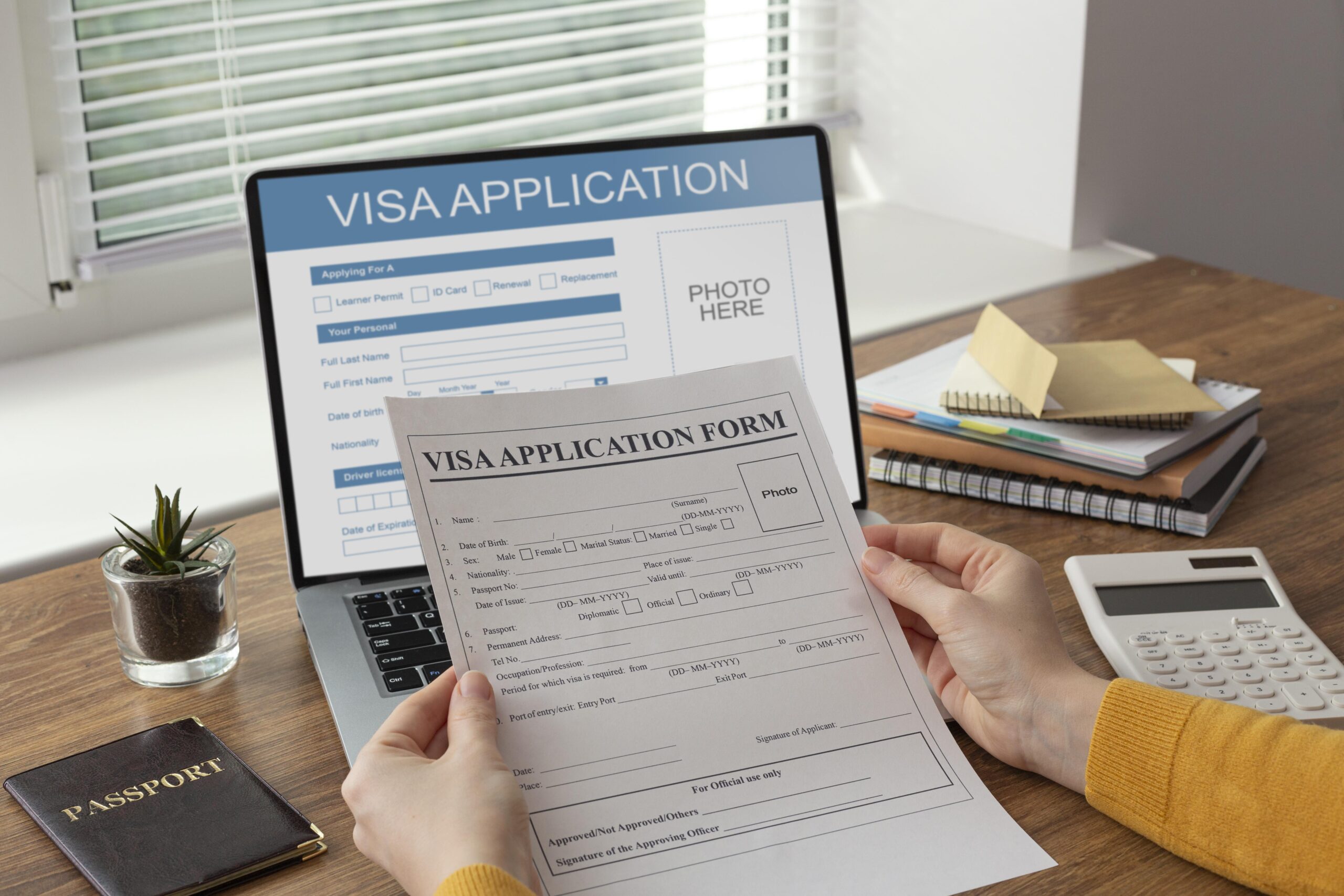
The U.S. work visa remains one of the most sought-after pathways for skilled professionals looking to build a career in the United States. It also enables U.S. employers to fill specialized positions with qualified international talent across industries such as technology, healthcare, engineering, finance, education, and research.
Demand for employment-based visas continues to be strong. According to the U.S. Citizenship and Immigration Services, employers submitted 343,981 eligible H-1B registrations for fiscal year 2026 against the annual cap of 85,000 visas, highlighting the continued need for skilled foreign workers in the U.S. economy.
With multiple work visa categories available, selecting the right option can be challenging. Each visa has its own eligibility requirements, application process, and documentation standards. This guide explains the different types of U.S. work visas, who qualifies for them, how the application process works in Los Angeles, and the common challenges applicants may face.
What Is a U.S. Work Visa?
A work visa is an immigration authorization that allows eligible foreign nationals to work in the United States for a specific employer, occupation, or business activity. Most employment visas require sponsorship from a U.S. employer, although certain categories are available to investors, traders, individuals with extraordinary abilities, and other qualifying applicants.
Work visas generally fall into two broad categories:
- Nonimmigrant work visas, which authorize temporary employment in the United States.
- Immigrant employment visas, which may provide a pathway to lawful permanent residence (a Green Card).
The appropriate visa category depends on several factors, including:
- Your profession and qualifications.
- The type of employment offered.
- Your nationality.
- The length of the intended stay.
- Long-term immigration goals.
- Sponsorship requirements.
For example, technology professionals may qualify for an H-1B visa, multinational executives may be eligible for an L-1 visa, while treaty investors and traders may qualify under the E-1 or E-2 visa categories. Choosing the appropriate option requires careful evaluation of your individual circumstances and the employer’s needs.
Understanding Temporary and Permanent Employment Options
Many professionals begin their careers in the United States through temporary employment visas before pursuing permanent immigration opportunities. Some work visa options permit extensions, changes of status, or transitions to employment-based Green Cards, while others are intended solely for temporary assignments.
Because each immigration pathway has different legal requirements, applicants should understand how their current visa may affect future opportunities. Individuals planning a long-term career in the United States often benefit from considering permanent immigration strategies early in the process rather than waiting until their temporary status is close to expiring.
Applicants working with an immigration attorney in California can better understand how various visa categories align with both immediate employment objectives and future immigration plans.
Why Choosing the Right U.S. Work Visa Matters
Selecting the right work visa is about more than obtaining permission to work in the United States. The visa category you choose affects your eligibility, the type of employment you can accept, how long you may remain in the country, and, in some cases, your ability to pursue permanent residency in the future. Choosing the wrong option can result in delays, additional government requests, or even a denied application.
Your Visa Determines Your Employment Opportunities
Each work visa is intended for a specific type of worker or business activity. Understanding these differences is the first step toward selecting the right pathway.
Some of the most common work visa categories include:
- H-1B Visa: For professionals working in specialty occupations that typically require a bachelor’s degree or higher.
- L-1 Visa: For employees transferring from an overseas office to a U.S. office within the same company.
- TN Visa: Available to qualified Canadian and Mexican professionals under the United States-Mexico-Canada Agreement (USMCA).
- E-1 and E-2 Visas: For treaty traders and investors conducting substantial trade or investing in a U.S. business.
- O-1 Visa: For individuals who have demonstrated extraordinary ability in fields such as science, business, education, athletics, or the arts.
- H-2B Visa: For temporary or seasonal non-agricultural workers.
- R-1 Visa: For individuals performing religious work for qualifying nonprofit organizations.
Each category has different eligibility requirements, documentation standards, and processing procedures, making it essential to identify the visa that best matches your qualifications and career goals.
Why Employers Need the Right Visa Strategy
Choosing the appropriate visa is equally important for U.S. employers. Businesses across industries rely on international talent to fill specialized positions, expand operations, and remain competitive.
A well-prepared petition can help employers:
- Reduce processing delays.
- Minimize the risk of Requests for Evidence (RFEs).
- Improve the accuracy of supporting documentation.
- Keep hiring timelines on track.
- Meet sponsorship requirements more efficiently.
Working with an experienced employment visa attorney can help employers prepare stronger petitions and avoid common filing mistakes.
Consider Your Long-Term Immigration Goals
Many work visas are temporary, but some may create opportunities for future employment-based immigration. Planning ahead can help applicants make informed decisions that support both immediate employment and long-term career objectives.
Depending on your circumstances, you may eventually qualify for:
- Adjustment of Status
- Employment Authorization
- Consular Processing
- Employment-based permanent residence
Understanding how your temporary work visa fits into your broader immigration plans can make future transitions smoother.
Seek Professional Guidance Early
Every applicant’s situation is unique. Factors such as your profession, educational background, employer, nationality, and long-term goals all influence which visa category is most appropriate.
Consulting a work visa lawyer in Los Angeles early in the process can help you:
- Determine your eligibility.
- Select the most appropriate visa category.
- Prepare accurate supporting documentation.
- Reduce avoidable delays.
- Navigate the application process with greater confidence.
Types of U.S. Work Visas
The United States offers several employment-based visa categories to meet different workforce needs. Each visa serves a specific purpose and has unique eligibility requirements, sponsorship rules, and validity periods. Understanding these options can help professionals, employers, and business owners determine the most appropriate pathway based on their qualifications and career goals.
H-1B Visa: For Specialty Occupations
The H-1B visa is one of the most recognized employment visas in the United States. It allows U.S. employers to hire foreign professionals in specialty occupations that typically require at least a bachelor’s degree or its equivalent in a related field.
Common industries that rely on H-1B workers include:
- Information technology
- Engineering
- Healthcare
- Finance
- Architecture
- Education
- Scientific research
To qualify, applicants generally need:
- A valid job offer from a U.S. employer.
- A position that qualifies as a specialty occupation.
- The required educational qualifications or equivalent experience.
- Employer sponsorship.
Most H-1B petitions are subject to an annual cap, making timely preparation essential. Employers must also obtain an approved Labor Condition Application (LCA) before filing the petition with USCIS.
Best suited for: Skilled professionals seeking long-term career opportunities with U.S. employers.
Also Read: 10 Common Reasons H-1B Visa Applications Get Delayed and How to Avoid Them
L-1 Visa: For Intracompany Transfers
The L-1 visa enables multinational companies to transfer eligible employees from a foreign office to a U.S. office. It is commonly used by businesses expanding into the United States or relocating experienced personnel.
There are two categories:
- L-1A: For executives and managers.
- L-1B: For employees with specialized knowledge of the company’s products, services, or operations.
To qualify, applicants must generally:
- Have worked for the foreign company for at least one continuous year within the previous three years.
- Be transferring to a qualifying U.S. office with a parent, branch, affiliate, or subsidiary relationship.
- Continue working in an executive, managerial, or specialized knowledge role.
The L-1 visa can also support companies establishing a new office in the United States, provided they meet applicable immigration requirements.
Best suited for: Multinational executives, managers, and employees with specialized company knowledge.
TN Visa: For Canadian and Mexican Professionals
The TN visa was created under the United States-Mexico-Canada Agreement (USMCA) to facilitate temporary employment for qualified Canadian and Mexican citizens in designated professional occupations.
Unlike many other employment visas, the TN category is available only to citizens of Canada and Mexico working in approved professions such as:
- Engineers
- Accountants
- Scientists
- Architects
- Computer systems analysts
- University professors
- Medical professionals in qualifying roles
Applicants must:
- Hold citizenship in Canada or Mexico.
- Have a job offer from a U.S. employer.
- Meet the educational or professional requirements for the listed occupation.
- Demonstrate that the employment is temporary.
The TN visa is often preferred because it generally offers a straightforward application process compared to some other work visa categories.
Best suited for: Qualified Canadian and Mexican professionals accepting temporary employment in the United States.
E-1 Visa: For Treaty Traders
The E-1 Treaty Trader Visa allows nationals of countries that maintain qualifying commerce and navigation treaties with the United States to enter the country for substantial international trade.
Trade may involve:
- Goods
- Services
- Technology
- Banking
- Insurance
- Transportation
- International commerce
Key eligibility requirements include:
- Citizenship of a treaty country.
- Substantial trade between the United States and the treaty country.
- Trade that is principally between those two countries.
- Entry into the United States to develop or direct the trading enterprise or perform an essential role.
Unlike employment-based visas requiring employer sponsorship, the E-1 visa focuses on the applicant’s involvement in qualifying international trade.
Best suited for: Business owners, executives, managers, and essential employees engaged in significant international trade.
E-2 Visa: For Treaty Investors
The E-2 Treaty Investor Visa is intended for nationals of treaty countries who make a substantial investment in a U.S. business. It enables investors to develop and direct their enterprise while living and working in the United States.
To qualify, applicants generally must:
- Be a citizen of an eligible treaty country.
- Make a substantial investment in a bona fide U.S. business.
- Demonstrate that the investment is active and at risk.
- Own at least 50% of the business or maintain operational control through a managerial position or similar authority.
Unlike passive investments, the E-2 visa requires active participation in managing or directing the enterprise. Investors may also bring certain employees with specialized skills or executive responsibilities, provided they meet the applicable requirements.
Best suited for: Entrepreneurs, investors, and business owners establishing or operating businesses in the United States.
O-1 Visa: For Individuals with Extraordinary Ability
The O-1 visa is intended for individuals who have demonstrated extraordinary ability or achievement in their profession. Unlike many employment-based visas, the O-1 category recognizes applicants who have reached a high level of expertise and are widely recognized within their field.
The O-1 visa is commonly used by:
- Scientists
- Researchers
- Engineers
- Entrepreneurs
- Business executives
- Artists
- Athletes
- Actors, musicians, and other entertainers
To qualify, applicants must generally provide evidence of sustained national or international recognition. This may include major awards, published work, media coverage, membership in distinguished organizations, high salaries, or other documentation demonstrating exceptional accomplishments.
Although employer sponsorship is typically required, the petition may also be filed by a U.S. agent representing the applicant under qualifying circumstances.
Best suited for: Individuals with exceptional achievements seeking to work in the United States.
H-2B Visa: For Temporary Non-Agricultural Workers
The H-2B visa allows U.S. employers to hire foreign workers for temporary, seasonal, peak-load, or intermittent non-agricultural jobs when qualified U.S. workers are unavailable.
Industries that frequently use the H-2B program include:
- Hospitality
- Tourism
- Landscaping
- Construction
- Seafood processing
- Amusement and recreation
- Event management
To qualify, employers must demonstrate that:
- The need for workers is temporary.
- There are not enough qualified U.S. workers available.
- Hiring foreign workers will not adversely affect the wages or working conditions of similarly employed U.S. workers.
Because the H-2B program has annual numerical limits and filing deadlines, employers should begin preparing their petitions well in advance.
Best suited for: Employers with temporary labor shortages and foreign nationals seeking seasonal employment opportunities.
R-1 Visa: For Religious Workers
The R-1 visa is available to religious workers who have been offered employment by a qualified nonprofit religious organization in the United States.
Eligible positions may include:
- Ministers
- Priests
- Rabbis
- Imams
- Missionaries
- Religious instructors
- Other workers performing religious occupations or vocations
Applicants must generally:
- Be a member of the same religious denomination as the sponsoring organization for at least two years before applying.
- Have a qualifying job offer from a nonprofit religious organization.
- Intend to work in a religious vocation or occupation.
The R-1 visa enables religious organizations to bring qualified personnel to the United States while supporting their ministries and faith-based activities.
Best suited for: Ministers and other religious workers serving qualified nonprofit organizations.
How to Choose the Right U.S. Work Visa
Choosing the right work visa depends on several factors, including your profession, nationality, employer, and long-term immigration goals. The table below provides a quick comparison of the most common U.S. work visas to help you identify which option may best fit your circumstances.
| Visa Type | Ideal For | Employer Sponsorship | Nationality Requirement | Investment Required | Typical Employment | Long-Term Immigration Potential |
| H-1B Visa | Skilled professionals in specialty occupations | ✔ Required | None | ✘ No | Long-term professional roles | ✔ Possible |
| L-1 Visa | Executives, managers, and specialized employees transferring within a company | ✔ Required | None | ✘ No | Intracompany transfers | ✔ Possible |
| TN Visa | Qualified professionals under the USMCA | ✔ Required | Canadian or Mexican citizens only | ✘ No | Professional occupations | Limited |
| E-1 Visa | Treaty traders conducting substantial international trade | Not typically employer-sponsored | Treaty country nationals | ✘ No | International trade | Limited |
| E-2 Visa | Entrepreneurs and investors | Not typically employer-sponsored | Treaty country nationals | ✔ Yes | Business ownership and management | Limited |
| O-1 Visa | Individuals with extraordinary ability or achievement | ✔ Required (or U.S. agent) | None | ✘ No | Specialized professional work | ✔ Possible |
| H-2B Visa | Temporary or seasonal non-agricultural workers | ✔ Required | None | ✘ No | Seasonal or temporary employment | Limited |
| R-1 Visa | Religious workers | ✔ Required | None | ✘ No | Religious occupations | ✔ Possible |
General Eligibility Requirements for a U.S. Work Visa
Although eligibility requirements vary by visa category, most U.S. work visas share several common criteria. Before applying, applicants should review these requirements to determine whether they qualify and gather the necessary documentation.
To be eligible for a U.S. work visa, you will typically need:
- A qualifying job offer: Most work visas require an offer of employment from a U.S. employer.
- Employer sponsorship: The employer must file the appropriate petition for visa categories such as H-1B, L-1, H-2B, TN, and R-1.
- Relevant qualifications: Applicants should meet the educational, professional, licensing, or experience requirements for the position.
- Valid passport: A passport that remains valid for the required period of travel and employment.
- Supporting documentation: Educational credentials, employment records, resumes, licenses, certifications, and other evidence demonstrating eligibility.
- Visa-specific requirements: Some categories require additional criteria, such as extraordinary ability (O-1), treaty nationality (E-1/E-2), or a substantial investment (E-2).
- Admissibility to the United States: Applicants must satisfy applicable immigration, security, and medical requirements.
- Financial capability (where applicable): Certain visa categories may require proof of financial resources or business investment.
- Intent to comply with visa conditions: Applicants must agree to comply with the terms, duration, and conditions of their visa classification.
Meeting the general eligibility requirements is only the first step. Because every work visa has its own rules and documentation standards, reviewing the specific requirements for your chosen visa category before filing can help reduce delays and improve the likelihood of a successful application.
Step-by-Step U.S. Work Visa Application Process
Applying for a U.S. work visa involves multiple stages, and the exact process varies depending on the visa category. However, most employment-based visas follow a similar sequence of steps. Understanding the process in advance can help applicants and employers prepare the required documentation, avoid common mistakes, and reduce unnecessary delays.
U.S. Work Visa Application Process
- Determine the Right Visa Category
Identify the visa that best matches your qualifications, job role, nationality, and immigration goals. - Secure a Job Offer or Sponsorship (If Required)
Obtain a qualifying job offer from a U.S. employer or meet the sponsorship requirements for your chosen visa category. - Gather Supporting Documents
Prepare documents such as your passport, educational credentials, employment history, professional licenses, financial records (if applicable), and other supporting evidence. - Employer Files the Petition
For employer-sponsored visas, the employer submits the required petition to U.S. Citizenship and Immigration Services (USCIS). Certain visa categories may also require additional certifications, such as a Labor Condition Application (LCA). - Complete the Visa Application
Once the petition is approved (when applicable), complete the required visa application forms and pay the applicable government fees. - Attend the Visa Interview
Attend an interview at a U.S. embassy or consulate if required, bringing all supporting documentation and responding to questions about your employment and qualifications. - Receive a Decision
After the application is reviewed, you may receive a visa approval, a request for additional information, or a denial, depending on your eligibility and supporting evidence. - Travel to the United States and Begin Employment
After your visa is issued, you can travel to the United States and begin employment in accordance with the conditions of your approved visa.
While these steps provide a general overview, every visa category has unique filing requirements, processing timelines, and documentation standards. Working with an experienced work visa lawyer in Los Angeles can help ensure your application is complete, accurate, and aligned with the requirements of your specific visa category.
Documents Commonly Required for U.S. Work Visas
The documents required for a U.S. work visa vary by visa category, but most applicants should be prepared to submit a combination of personal, educational, employment, and employer-sponsored documentation. Organizing these materials in advance can help prevent processing delays and Requests for Evidence (RFEs).
| Document | Purpose | Who Provides It |
| Valid Passport | Verifies your identity and nationality for travel and immigration purposes. | Applicant |
| Job Offer Letter | Confirms the position, job duties, salary, and terms of employment. | U.S. Employer |
| Educational Degree(s) | Demonstrates that you meet the educational requirements for the visa category. | Applicant / Educational Institution |
| Credential Evaluation | Establishes the U.S. equivalency of foreign educational qualifications, when required. | Authorized Credential Evaluation Agency |
| Resume or Curriculum Vitae (CV) | Summarizes your education, work experience, skills, and professional achievements. | Applicant |
| Employment Verification Letter(s) | Confirms previous or current work experience relevant to the position. | Current or Former Employer(s) |
| USCIS Forms and Petitions | Initiates the immigration process and provides required information to USCIS. | Applicant and/or Sponsoring Employer |
| Employer Support Letter | Explains the business need for hiring the applicant and confirms the offered position. | U.S. Employer |
| Financial Documents (Where Applicable) | Demonstrates the financial ability to support an investment or satisfy visa-specific requirements, such as for E-2 visas. | Applicant and/or Business Entity |
The exact documentation depends on the work visa you are applying for. Some categories, such as the O-1, E-1, or E-2 visas, require additional evidence to establish extraordinary ability, treaty eligibility, or qualifying investments. Reviewing the specific requirements for your visa category and ensuring your documents are complete before filing can help streamline the application process.
Tips for a Successful Work Visa Application
A well-prepared application can improve your chances of approval and help you avoid unnecessary delays. While every visa category has its own requirements, these best practices can help you navigate the process more efficiently.
- Apply as early as possible: Many work visas have annual caps, filing windows, or lengthy processing times. Starting early gives you more time to gather documents and address any unexpected issues.
- Keep your documents organized: Maintain clear, up-to-date copies of your passport, educational credentials, employment records, financial documents, and any supporting evidence required for your visa category.
- Double-check every form before submission: Even minor errors or missing information can result in processing delays, Requests for Evidence (RFEs), or application denials.
- Stay informed about USCIS updates: Immigration policies, filing fees, forms, and processing times can change. Regularly reviewing USCIS announcements helps ensure your application meets current requirements.
- Prepare thoroughly for your visa interview: Review your application, understand your job role or business plans, and be ready to answer questions honestly and confidently during your consular interview.
- Respond promptly to government requests: If USCIS or a U.S. consulate requests additional documentation or clarification, submit the required information as quickly as possible to avoid unnecessary delays.
- Work with an experienced immigration attorney: Professional legal guidance can help you determine the appropriate visa category, prepare a complete application, address complex eligibility issues, and navigate the process with greater confidence.
Taking a proactive approach can make the application process smoother and reduce the risk of avoidable setbacks. Careful planning, accurate documentation, and timely communication are essential steps toward securing the work visa that best supports your career goals.
Build Your Career in the United States with Root Law Group
Starting a career in the United States begins with choosing the right work visa and submitting a well-prepared application. With multiple visa categories, changing immigration regulations, and detailed documentation requirements, professional guidance can help you avoid unnecessary delays and move forward with confidence.
Root Law Group assists professionals, entrepreneurs, investors, religious workers, multinational employees, and U.S. employers with a wide range of employment-based immigration matters. Whether you’re applying for your first work visa, transferring to a U.S. office, investing in a business, or exploring permanent employment opportunities, our team provides practical legal guidance tailored to your goals.
With Root Law Group, you get:
- Guidance on multiple U.S. work visa categories
- Personalized eligibility assessments
- Comprehensive petition preparation
- Assistance with employer-sponsored immigration
- Support for consular processing and change of status
- Representation for businesses and individuals across California and the United States
Schedule Your Free Consultation
Frequently Asked Questions
1. What is a U.S. work visa?
A U.S. work visa allows eligible foreign nationals to live and work in the United States for a specific employer, business, or purpose. The appropriate visa category depends on factors such as your occupation, qualifications, nationality, and employment circumstances.
2. Which U.S. work visa is right for me?
The right visa depends on your professional background and goals. For example, the H-1B visa is commonly used for specialty occupations, the L-1 visa is for intracompany transfers, the TN visa is available to eligible Canadian and Mexican professionals, while the E-2 visa is intended for qualifying investors.
3. Do all U.S. work visas require employer sponsorship?
No. Many work visas, including the H-1B, L-1, H-2B, TN, and R-1, require employer sponsorship. However, visas such as the E-1 and E-2 focus on qualifying trade or investment activities rather than traditional employer sponsorship.
4. How long does it take to obtain a U.S. work visa?
Processing times vary depending on the visa category, USCIS workload, consular processing times, and whether premium processing is available. Some applications may be completed within weeks, while others can take several months.
5. Can my spouse and children accompany me to the United States?
Many employment-based visas allow eligible spouses and unmarried children under the age of 21 to apply for dependent visas. The benefits available to dependents vary depending on the principal visa category.
6. Can I change employers while working in the United States?
It depends on your visa category. Certain visas, such as the H-1B, may allow you to change employers if the new employer files the required petition and USCIS approves the transfer or change, as applicable.
7. Can a temporary work visa lead to a Green Card?
Some temporary work visas can serve as a pathway to employment-based permanent residence if you meet the eligibility requirements and your employer is willing to sponsor you. The process varies depending on your visa category and immigration goals.
8. What are the most common reasons work visa applications are delayed?
Delays often result from incomplete documentation, filing errors, Requests for Evidence (RFEs), visa caps, background checks, or high application volumes. Preparing a complete application can help minimize these issues.
9. Can I apply for a work visa while I am already in the United States?
In some cases, yes. Eligible applicants may be able to apply for a change or extension of status without leaving the United States, depending on their current immigration status and the visa category they are pursuing.
10. Why should I hire an immigration attorney for a work visa application?
An experienced immigration attorney can evaluate your eligibility, recommend the most appropriate visa category, prepare supporting documentation, respond to government requests, and help reduce the risk of delays or avoidable mistakes throughout the application process.